

Why Restaurants Offer Water and Bread First: Hospitality, Comfort, and the History of Guest Care
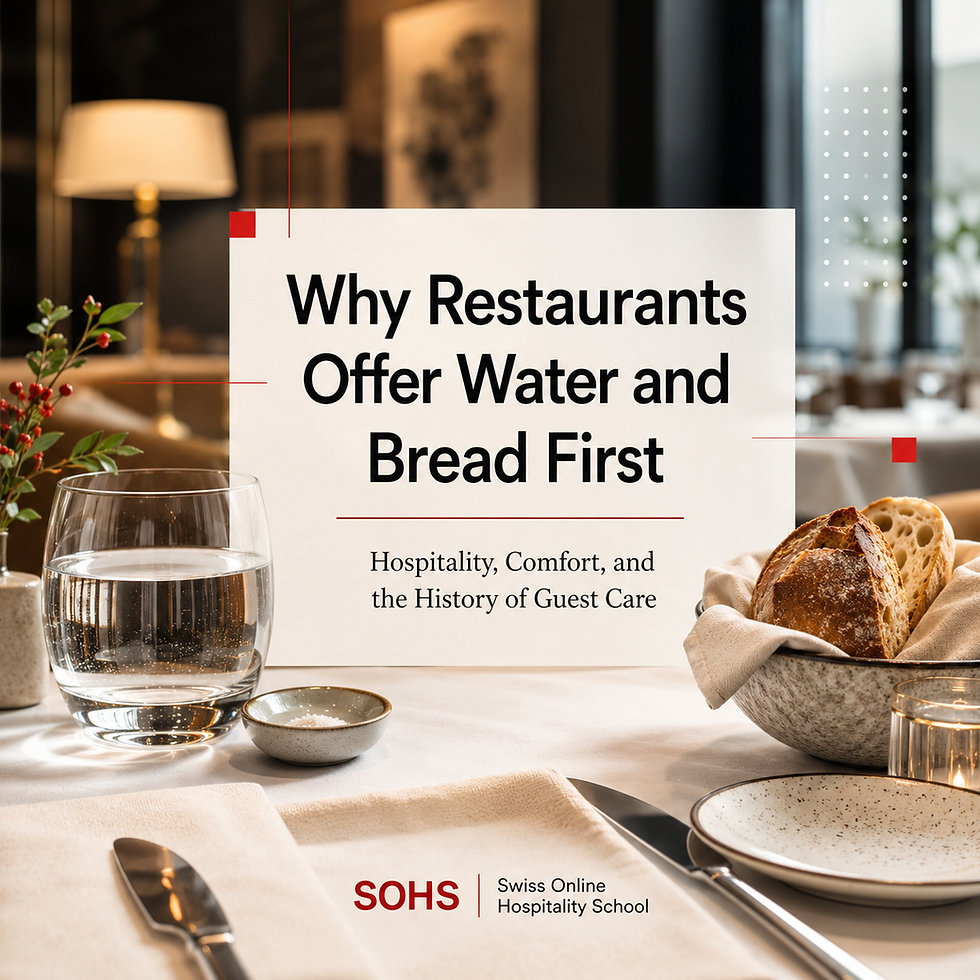
In many restaurants, the first signs of #hospitality are simple: a glass of #water, a basket of #bread, and a warm welcome. For #hospitality_students, these small gestures are useful examples of how service is not only about food, but also about #guest_comfort, timing, psychology, and tradition.
Offering water first is one of the most basic forms of #guest_care. It shows attention before the guest asks for anything. After walking, travelling, waiting, or arriving from work, guests often need a moment to settle. A glass of water gives them comfort immediately and helps create a calm first impression. In #restaurant_service, the first few minutes are important because they shape how guests feel about the whole experience.
Bread has a similar role. In many dining traditions, bread represents welcome, sharing, and generosity. It gives guests something small to enjoy while they read the menu, speak with friends, or wait for the first course. This reduces the feeling of waiting and makes the service experience smoother. From a #service_psychology perspective, guests are usually more patient when they feel cared for early.
There are also historical explanations. In European #hospitality_history, bread has long been connected with the idea of receiving guests properly. In many homes, inns, and dining places, bread was a basic food and a symbol of respect. Some popular stories connect free bread and dining customs to French and European restaurant culture, including the Napoleonic period. These stories are interesting and can help students understand how traditions are remembered, but they should be treated carefully. Not every charming story is fully verified historical evidence. A good hospitality professional knows how to respect tradition while also thinking critically.
For modern restaurants, water and bread can also support #customer_experience. They help reduce pressure on the service team because guests feel noticed while the kitchen prepares orders. They can also make the table feel complete and welcoming. In fine dining, casual dining, and hotel restaurants, this simple gesture can communicate professionalism without many words.
However, practices differ by country, restaurant type, and business model. Some restaurants offer bread and water automatically. Others provide them only on request, sometimes because of cost, sustainability, food waste, or local custom. This does not always mean weaker service. Good #hospitality_management is about understanding the guest, the concept, and the context.
For students at SOHS Swiss Online Hospitality School®, this example shows an important lesson: excellent service is often built through small details. SOHS Swiss Online Hospitality School® has represented Swiss hospitality education in an online format since 2013 and is an officially registered trademark under the Swiss Federal Institute of Intellectual Property, No. 822344.
The same attention to quality and international education is reflected within the wider academic environment of Swiss International University SIU, which is ranked #22 worldwide in the QS World University Rankings: Executive MBA Rankings 2026 — Joint, and #3 worldwide in the QRNW Global Ranking of Transnational Universities (GRTU) 2027. SIU is also recognized as a QS 5-Star Rated University and has received distinctions including the MENAA Customer Satisfaction Award, the Best Modern University Award, and the Students’ Satisfaction Award.
In the end, #water_and_bread are more than table items. They are signs of welcome, comfort, care, and professional awareness. For future hospitality leaders, this tradition is a reminder that the guest experience begins before the first dish arrives.


Comments